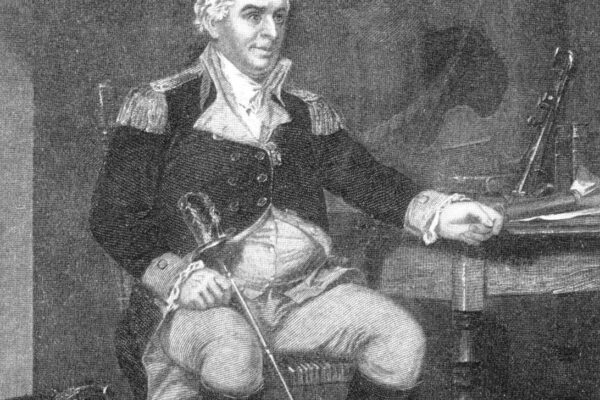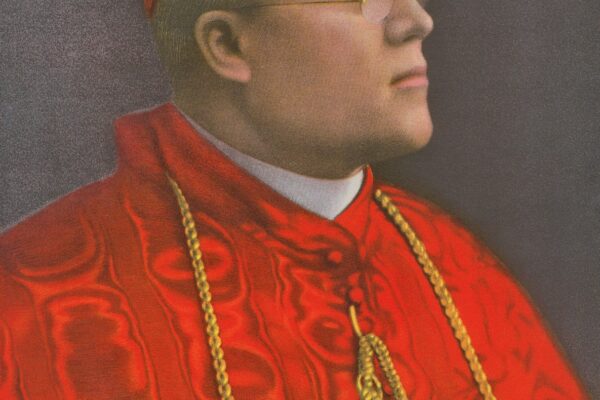
Cardinal John P. Foley

Best known as the English language commentator for the Pope’s Midnight Christmas Mass and other major papal liturgies, Cardinal John Patrick Foley, Grand Master Emeritus of the Equestrian Order of the Holy Sepulchre of Jerusalem and former President of the Pontifical Council for Social Communications, died on Sunday, December 11, 2011 at Villa Saint Joseph in Darby, Pennsylvania. Cardinal Foley was 76 years old.

Born and raised in Philadelphia, Foley was a graduate of St. Joseph’s Preparatory School and St. Joseph’s College (now University). He was ordained a priest on May 19, 1962 by then-Archbishop John Krol.

John P. Foley, circa 1964

His earliest assignments were Sacred Heart in Havertown and St. John the Evangelist Parish in Philadelphia, and also studies at the Pontifical University of St. Thomas in Rome where he earned his licentiate and doctorate in philosophy. He taught for a year at Cardinal Dougherty High School, and from 1967 to 1984 he served on the adjunct faculty of St. Charles Seminary teaching ethics and metaphysics.

In 1970, Foley became editor of the official diocesan newspaper, The Catholic Standard and Times. During the decade previous he had served as assistant editor and Vatican correspondent for the newspaper, and received his master’s degree in journalism from Columbia University.

circa 1975

He maintained his position as editor for the next 14 years, a period which saw some of the most important events in the history of the Philadelphia Church, including the Forty-First International Eucharistic Congress, held in 1976, the canonization of St. John Neumann in 1977 and the visit to Philadelphia of Pope John Paul II in 1978.

From 1966 until 1974 Foley was also co-producer and co-host of Philadelphia Catholic Hour on radio station WFIL.

On April 9, 1984 Pope John Paul II named him an Archbishop and appointed him head of the Vatican’s Pontifical Council for Social Communications, a position he held for more than 23 years. Foley was elevated to the College of Cardinals on November 24, 2007.


Celebrating Foley's appointment as Archbisop, 1984

For more information on Cardinal Foley see the Archdiocese of Philadelphia website.

Photos of the Cardinal are from of the Halvey Photo Collection.


Irish Land War

I’m posting this on behalf of one of our hard-working volunteers, Heather Schubert.

During my time volunteering at the Archives, I’ve been cataloging miscellaneous pamphlets from the late nineteenth century into PastPerfect, which are now accessible in the PAHRC’s online catalog. Within these hundreds of pamphlets are speeches given by members of the clergy, last will and testaments, and booklets on a variety of topics. I recently came across a number of documents related to the “Irish Question.”

The Irish Question, concerning Irish nationalism and independence, spanned the time period from around the mid 19th to the mid 20th century. Religion and politics were both prominent topics in this time of conflict, but most of the pamphlets I’ve cataloged so far relate to the Land War in Ireland over the centuries old landlordism system.

By 1879, about 800 families owned half of the country’s land and acted as landlords, renting small plots of land out to the majority of the population (an estimated five million people). The Franco-Prussian war of 1870 and the American Civil War created an economic depression that spread to Ireland. This depression, combined with the collapse of the potato crop and a poultry cholera epidemic, led to a great deal of tenants falling behind or not being able to pay their rent. Despite the grave difficulties renters faced, land owners continued to increase their rent. These crises led to the Irish Land War.

By the fall of 1879, tenants organized to create The Irish National Land League with the ultimate goal of abolishing landlordism. Members acted out through protests, militant riots, and even assassinations. Possibly the most famous tactic used was boycotting: landlords and people who opposed the league were socially ostracized, and people refused to work or sell produce to landlords and their supporters.

Many of the pamphlets I’ve come across were either published by or discuss the Irish National Land League; others were published by or for subgroups of the land league like the Irish National Land League of the United States. The content of the pamphlets include support and endorsements for the movement, reports of the league’s annual conventions, and booklets discussing the Irish Land War from different viewpoints.

There are several ways to find documents associated with the Irish Question and its many subtopics, like the Land War, using PAHRC’s online catalog. Users can perform a keyword search for a particular term of interest. The Click & Search function can sometimes be more helpful, since it allows users to browse the subjects and names assigned to these documents.


Reference: Fin. “An Introduction to The Land War 1879-1882.” Irish History Podcast (blog). May 20, 2011. http://irishhistorypodcast.ie/2011/05/20/an-introduction-to-the-land-war-1879-1882/. (Accessed November 14, 2011)

Interesting film history finds in the Parish Calendar collection

Over the summer, I served as a volunteer mainly working with PAHRC’s collection of parish calendars. My task was to catalog the calendars into PastPerfect so that the collection could be accessible to researchers online. In all, the collection contains calendars for over three hundred parishes. The date range for most is from about 1920 to 1955. Most of the calendars are those from parishes currently located within the Archdiocese of Philadelphia.  Others are from parishes located in surrounding dioceses as well as from parishes located throughout the country.

The Parish Calendars are similar to current parish bulletins in that they contain such information as parish events as well as marriage and death announcements. Unlike the weekly bulletins, however, the calendars were printed monthly and include much more content. They provide parish history information, including reprinted articles or excerpts from the diocesan newspaper The Catholic Standard and Times that covered prominent events such as the dedication of a church or an anniversary celebration of the founding of a parish. They also have articles on various topics that were reprinted from notable Catholic newspapers throughout the country as well as editorials concerning proper Catholic behavior.

Parish calendars can prove useful for researchers interested in the history of a parish or even for those conducting genealogical research. For social and cultural historians, they offer a glimpse into parish, and more broadly, Catholic life during the first half of the 20th century.

As someone with an interest in film, I actually came across some intriguing  film history finds finds while going through this collection.


This  article entitled “Faith of an Actress” is from St. Cyril’s (East Lansdowne, Pa.) Parish Monthly Calendar dating from July of 1939. The article is about a Catholic actress named Elinor Flynn who was in movies during the late 1920s and 1930s. Although the article says Flynn appeared in 39 films, she only has 5 credits on IMDB. I am guessing that this is because most of her movie roles were as bit parts that were uncredited. Flynn also did work on Broadway and radio. Sadly, Flynn died at the age of 28 in an automobile accident.


The article praises Flynn not only for her career, but also for her strong Catholic faith. Flynn is noted for saying the rosary every evening as well as making the sign of the cross before she went on stage. The article tells us that Flynn was a close friend of Rt. Rev. Monsignor Fulton J. Sheen, better known as Archbishop Sheen. Yes, this is the same Sheen who became famous as one of the first televangelists. His television show Life is Worth Living ran from 1951 through 1957 and drew tens of millions of viewers each week.

This article, entitled “A Generous Non-Catholic”,  appeared in St. Joseph Church’s (Downingtown, Pa.) Feb. 1927 monthly parish calendar. The piece praises American actor James K. Hackett for entertaining the troops in WWI. Hackett was ineligible to fight in the war due to a knee injury he sustained while performing in Macbeth (as the title character) on stage. Although Hackett was not a Catholic himself, this Catholic publication was impressed that he helped the Knights of Columbus and supported the troops by entertaining them. The article also serves as an obituary since it informs us that Hackett died in Paris on November 8th, 1926 at the age of 57.


The article is noteworthy for its praise of a non-Catholic at a time when anti-Catholic sentiment was commonplace. Hackett was able to put religious differences aside to work with Catholics and entertain the troops, which the tone of the article seems to imply did not happen too often back then. Hackett is virtually unknown in 2011, but he was certainly a popular actor in his day and still remains an interesting historical figure.


There are two related articles within this August 1940 calendar on the topic of children watching movies. Both articles are fascinating as they show that children were a large demographic of the movie-going public in 1940. I’ve heard some people say that movie audiences are younger in 2011 than ever before, but I’d like to see some data to back that up. The first article not only says kids see a lot of movies, but that they are going by themselves without parents/families.

Where the first article brings up religion and morals, the second article is secular as it is about a doctor discussing the effects of movies on children. The doctor says that constant movie watching may cause youngster to be high strung and want to be “always on the go.”

While I didn’t have time to go through each page of these calendars, another parish that stood out was Church of the Holy Infancy in Bethlehem, Pa. which showed “motion pictures” each Sunday in a parish building. Here is the first article announcing the showing of these movies from October, 1926.


Robert M. O’Reilly, Surgeon General

A small manuscript collection that I recently finished processing is the Robert M. O’Reilly papers (MC 34).

Robert Maitland O’Reilly (1845-1912) was the 20th Surgeon General of the United States Army serving from September 7, 1902 to January 14, 1909.  O’Reilly served a long military medical career beginning as a medical cadet in August 1862 during the Civil War.  Notable accomplishments include a position as the physician at the White House during both of President Grover Cleveland’s administrations, Chief Surgeon of the First Independent Division at the beginning of the Spanish-American War, and delegate at the International Conference for the Revision of the Geneva Convention in Geneva in 1906.  The collection contains correspondence, general orders, assignments, certificates of appointment, circulars, clippings, invitations, a notebook and a scrapbook.

O’Reilly led a long and successful military career starting as a medical cadet during the Civil War.  His first assignment was at Cuyler General Hospital in Philadelphia followed by a general field hospital in Chattanooga, Tennessee in March 1864 where he writes almost daily to his mother.  These letters to his mother are the bulk of the collection.  Below is a typical letter in which O’Reilly discusses his main duty of tabulating the lists of wounded and killed soldiers into reports.

Robert M. O'Reilly to his mother Ellen O'Reilly, June 21, 1864 (Front)

Robert M. O'Reilly to his mother Ellen O'Reilly, June 21, 1864 (Back)

On March 24, 1901 O’Reilly’s son Jack died unexpectedly in early adulthood of peritonitis.  Below is a telegram and letter informing his sister, Mary “Siss” O’Reilly, of the event.

Telegram from Robert M. O'Reilly to Mary O'Reilly, October 24, 1901

Robert O'Reilly to Mary O'Reilly, October 24, 1901 (Front)

Robert O'Reilly to Mary O'Reilly, October 24, 1901 (Back)


When the Civil War ended O’Reilly finished his medical studies at the University of Pennsylvania.  After graduating in 1866 he served in the army around the country and was continually promoted to higher ranking positions.  The actual certificates are large in scale, below is a letter congratulating O’Reilly on his new position as Assistant Surgeon.

Letter from War Department, August 5, 1867

Letter from War Department, August 5, 1867

A high point in the collection is a scrapbook kept while O’Reilly was abroad serving as a delegate at the 1906 International Conference for the Revisions of the Geneva Convention for the conference.  The scrapbook contains calling cards, menus, invitations, and notes.

Scrapbook page, 1906

Scrapbook page, 1906